
Building European robotics roadmap
5/8/20242 min read
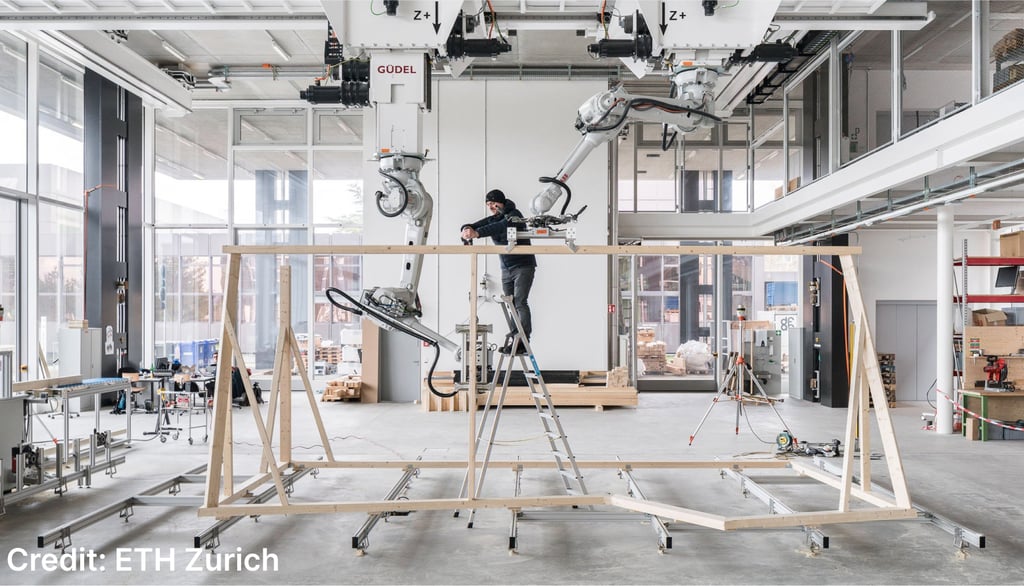

With Europe continuing to fall behind the US and China in robotics and industrial automation, the need for a coordinated, forward-looking robotics roadmap has become increasingly urgent. Such a roadmap would serve not only as a strategic vision, but also as a practical framework to align stakeholders across research, industry and policy. By clearly identifying priority sectors, investment needs and innovation targets, Europe could focus its resources more effectively and accelerate the adoption of robotics technologies where they are most needed, particularly in labor-scarce industries like agriculture, construction and manufacturing. Without a unified direction, fragmented national initiatives and inconsistent support mechanisms risk undermining Europe’s industrial competitiveness and technological sovereignty. A well-crafted roadmap would provide the long-term clarity and confidence needed to mobilize public and private investment, foster cross-border collaboration and ensure that Europe does not remain a follower in the next industrial revolution, but rather emerges as a proactive, innovative force.
Supporting the robotics sector is not only a matter of technological progress; it is a strategic necessity for maintaining Europe’s economic competitiveness and social cohesion in the face of demographic decline. As Europe faces profound demographic challenges, marked by an aging population and increasingly fragmented migration policies that vary from one country to another, robotics and automation could offer a compelling and scalable solution to mitigate the growing workforce gap. Demographic dynamics are contributing to persistent and growing labor shortages in labor-intensive sectors such as agriculture, logistics, construction and elderly care.
By complementing human labor rather than replacing it, robotics can help sustain productivity levels, reduce dependence on volatile migration flows and support the long-term resilience of Europe’s industrial base. Moreover, robotics could also help companies improve profitability, making them more competitive. In the agrifood sector, for example, personnel costs account for up to 60% of total fixed expenses. In this context, adopting automation would not only address labor shortages but also unlock significant cost savings, helping to preserve the economic viability of farming. Autonomous machines for farm-site inspection, precision planting, harvesting, livestock feeding and surveillance are becoming a reality, thanks to the incorporation of real-time perception tools and machine learning, especially in countries such as the Netherlands, Germany, Denmark, Sweden and Finland. However, the transition to fully autonomous machines is still far from complete. Similarly, in construction (which heavily relies on inbound migrant labor), robotic technologies could be adopted across almost the entire sector, helping to deliver measurable productivity gains. Retail, a sector with one of the lowest levels of margins, can also greatly benefit from robotics. By automating tasks like restocking, inventory checks and checkout, retailers can cut costs, boost efficiency and free up staff for higher-value roles, helping improve profitability in an increasingly competitive landscape, Allianz research team cites.